
UK Age Verification Causes VPN Surge: What Happened?
Published: July 2026
UK Age Verification Causes VPN Surge: What Happened?
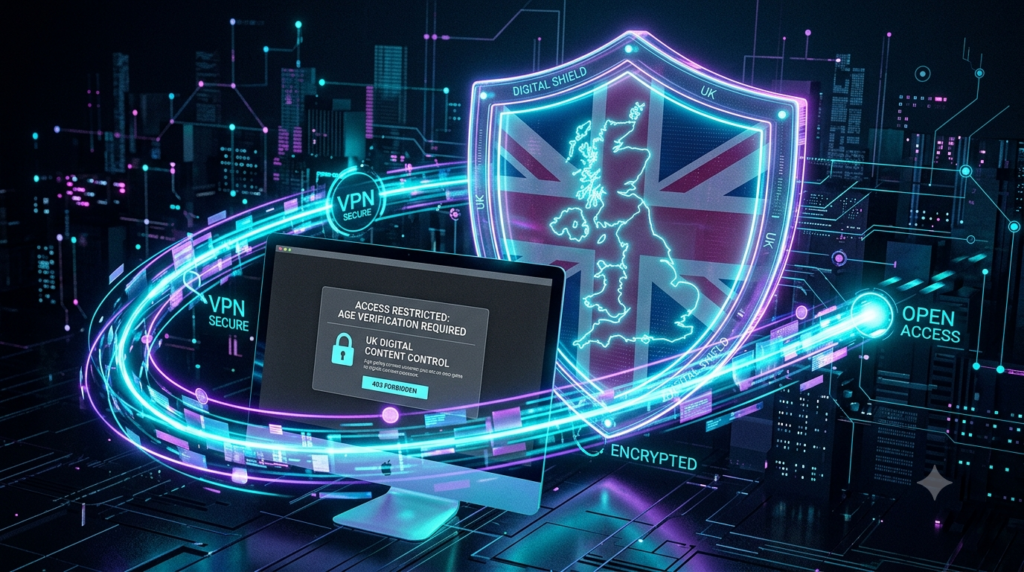
The rollout of the UK’s Online Safety Act has triggered one of the biggest shifts in online browsing behaviour in recent years. As age verification requirements came into force for many adult websites, millions of UK users were suddenly faced with a choice: verify their identity to continue accessing legal content, or look for alternative ways to protect their privacy.
The response was immediate. Reports indicated that traffic from the UK to major adult websites fell by around 77% in the days following the new requirements, while several leading VPN providers reported significant spikes in new subscriptions and app downloads. The sharp contrast between falling website traffic and rising VPN adoption suggests that many users weren’t simply giving up access—they were actively searching for privacy-focused alternatives.
For supporters of the legislation, the changes represent an important step toward preventing children from accessing adult content online. Critics, however, argue that requiring users to upload identification documents, payment details, or facial scans introduces new privacy and data security concerns. Even if verification providers handle personal information responsibly, many internet users are uncomfortable sharing sensitive data simply to access legal websites.
The surge in VPN usage highlights a broader trend that extends well beyond adult content. More people are becoming aware of how much personal information they share online and are looking for tools that give them greater control over their digital privacy. While a VPN is not a magic solution—and it doesn’t guarantee bypassing every age verification system—it has become one of the first tools many users turn to when governments or websites introduce new online restrictions.
So what exactly changed under the Online Safety Act, why did VPN signups surge almost overnight, and can a VPN actually help protect your privacy? Here’s what you need to know:
What Happened? The Trigger Behind the Surge
When the UK government’s regulatory framework took full effect, compliance deadlines forced websites hosting age-restricted content or adult media to integrate third-party age verification vendors. Platforms had to deploy methods such as:
- Government-Issued Photo ID Uploads: Passports, driving licenses, or national ID cards.
- Biometric Facial Estimation: AI algorithms analyzing camera scans to estimate age.
- Credit Card & Banking Verification: Micro-transactions or authorization checks to confirm adult status.
Faced with handing over sensitive biometric or identity data to third-party verification portals, millions of internet users opted out. Within 48 hours of implementation, major VPN services reported traffic surges from the UK ranging from 300% to over 1,000%, as citizens sought alternative ways to navigate the web without compromising their identity.
Why Are People Using VPNs?
The massive adoption of VPNs in the wake of the age verification mandate stems from a combination of convenience, risk avoidance, and fundamental privacy rights.
[User Requesting Access] ---> [UK Internet Service Provider] ---> [Age Gate / ID Upload Required]
                                       |
                                       v
                             (Bypassed with VPN)
                                       |
                                       v
[User via VPN (e.g., France/US IP)] ---> [Direct Access to Platform without ID]
1. Bypassing Digital ID Walls
A Virtual Private Network encrypts web traffic and routes it through a server located in another country—such as Ireland, France, or the United States—where UK age verification mandates do not apply. To the target website, the user appears to be visiting from outside the UK, seamlessly avoiding the mandatory age gate.
2. Aversion to Identity Verification Fatigue
Users are increasingly reluctant to complete complex multi-step identity verification processes simply to browse the web. A VPN offers a one-click solution that removes the friction introduced by verification pop-ups and third-party checks.
3. Fear of Data Breaches and Identity Theft
Uploading passport scans or facial images to digital verification vendors creates centralized honeypots for hackers. Past high-profile breaches of verification databases have left users wary of sharing sensitive documents on websites that could be compromised.
4. Overreach and Collateral Censorship
Many users worry that age verification mechanisms will inevitably expand to cover news sites, forums, social media networks, or political discussion groups, creating a blanket “digital passport” requirement for general internet usage.
Why Privacy Matters
The surge in VPN usage highlights a fundamental conflict between digital regulation and individual privacy. While child safety is a critical public priority, mandatory identity verification raises significant security concerns for all internet users.
The Risk of Centralized Surveillance
Requiring identity verification to access digital content effectively links a user’s real-world identity—their full legal name, home address, and photo—to their online browsing history. If verification logs are retained or shared across networks, it creates an unprecedented record of individual activity.
Third-Party Data Aggregation
Age verification is frequently outsourced to third-party tech vendors. Even when these companies promise strict data minimization policies, history has shown that user data can be monetized, stored insecurely, or subpoenaed.
Chilling Effect on Free Expression
When individuals know their real identity is tied to their browsing habits, they engage in self-censorship. Informational privacy is essential for allowing users to research sensitive topics, seek health advice, or participate in open discourse without fear of judgment, profiling, or exposure.
Broader Consequences & The Path Forward
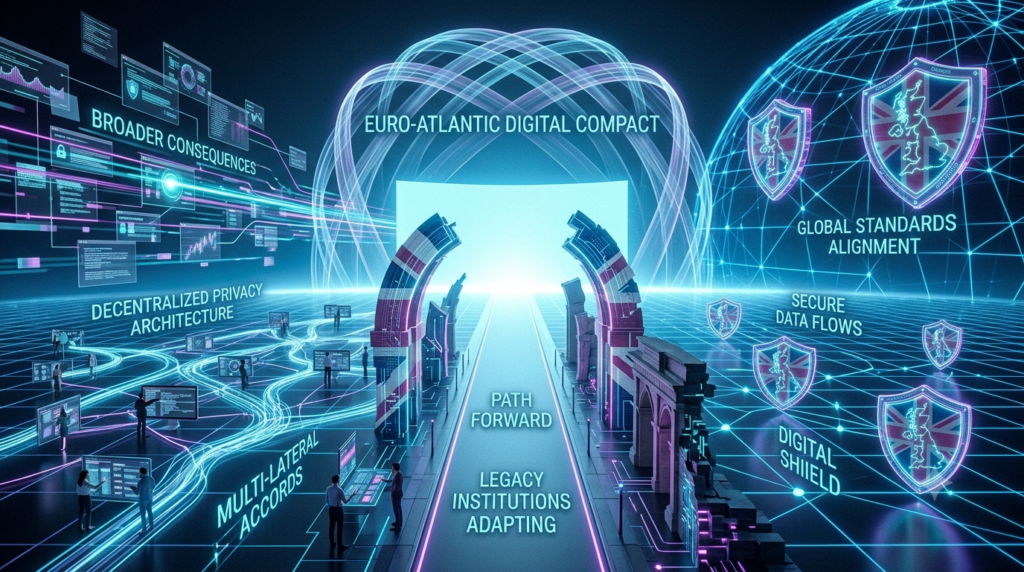
The UK’s age verification rollout serves as a key case study for digital policy worldwide:
- The “Cat-and-Mouse” Game: As governments enact localized digital barriers, adoption of privacy-preserving technology like VPNs, Tor, and encrypted DNS services accelerates.
- Digital Literacy Split: Tech-savvy users easily circumvent regional blocks using VPNs, while less tech-literate users are left exposed to security risks or compelled to upload sensitive documents.
- Alternative Solutions: Cybersecurity experts advocate for device-level or zero-knowledge proof (ZKP) verification models—where age is verified locally on a user’s device without transmitting raw personal data to external servers.
Summary Table: Age Verification vs. VPN Bypass
| Feature / Aspect | Mandated Age Verification | VPN Usage Response |
|---|---|---|
| Primary Mechanism | ID Upload, Biometrics, Credit Card | Encrypted Routing via International IPs |
| User Identification | Directly linked to real-world identity | Anonymous / Masked IP Address |
| Data Privacy Risk | High (Third-party database vulnerability) | Low (Zero-logs VPN policies) |
| User Experience | Friction-heavy, multi-step checks | One-click background connection |
Conclusion
The sudden surge in UK VPN usage following age verification legislation demonstrates that internet users place a high value on digital privacy and anonymity. As lawmakers around the globe consider similar measures, balancing online protection for minors with robust privacy safeguards for adult citizens remains one of the defining policy challenges of the modern internet era
Our Recommended VPNs
If privacy is your main concern, these providers consistently perform well:
- NordVPN – Excellent speeds, audited no-logs policy, large server network.
- Proton VPN – Strong privacy reputation and excellent security features.
- Surfshark – Great value with unlimited device connections.
- ExpressVPN – Reliable, fast, and beginner-friendly.
Frequently Asked Questions
Is using a VPN legal in the UK?
Yes. VPNs are legal in the UK. They are widely used by businesses and individuals to improve online security and privacy.
Will a VPN always avoid age verification?
No. It depends on how each website implements its verification system.
Does a VPN make me anonymous?
No. A VPN significantly improves privacy but does not make you completely anonymous online.
Are free VPNs a good idea?
Generally, no. Many free VPNs have limited speeds, data caps, or weaker privacy practices.
Final Thoughts
The UK’s age verification rollout has become one of the biggest recent drivers of VPN adoption.
Whether users are motivated by privacy concerns or simply want greater control over their personal information, the surge in VPN interest highlights a broader trend: people increasingly value tools that help protect their online privacy.
If you’re considering a VPN, choose one with a transparent privacy policy, independently audited no-logs claims, and a strong track record of security. A VPN won’t solve every privacy issue, but it’s one of the simplest and most effective ways to reduce your digital footprint online.